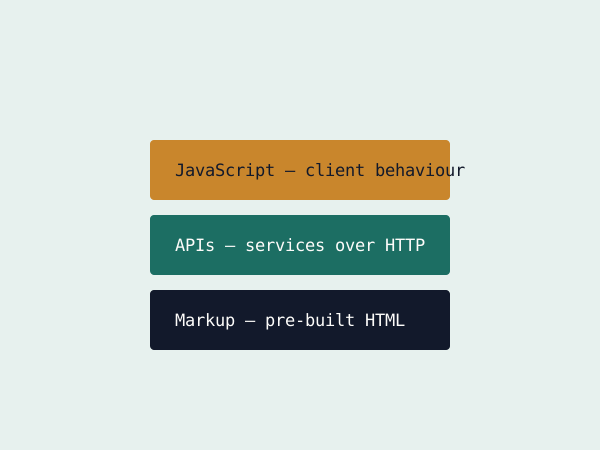
For most marketing sites and content businesses, adding a "connect wallet" button changes very little about how the site actually works - the HTML, CSS and hosting are exactly the same as before. Genuine Web3 functionality - reading from or writing to a blockchain - is a specific, narrow capability, not a general site upgrade.
// A minimal example: reading a wallet address, nothing more
const accounts = await window.ethereum.request({ method: 'eth_requestAccounts' });
Where it's genuinely useful right now
NFT marketplaces, token-gated content, and DAO tooling have real, specific needs a blockchain connection addresses directly. A restaurant's website or a law firm's marketing page almost never does.
Our current advice to clients
Start from the actual business problem, same as any other technology decision. If the honest answer is "we want to look current," that's a design and copy problem, not a blockchain integration.
Separating the technology from the speculation cycle
Blockchain-based identity, verifiable ownership records, and decentralized storage are genuine technical capabilities with real, if narrow, use cases. The 2021–2022 hype cycle attached those capabilities to a huge number of projects - a "web3" loyalty program, a "web3" social network - where a conventional database would have done the job more cheaply, more reliably, and with a far better user experience.
// Connecting a wallet is real complexity most users don't want for most tasks
const accounts = await window.ethereum.request({ method: 'eth_requestAccounts' });
Asking the question that actually matters
The useful filter for any "should this be web3" pitch: does this specific feature require a trustless, decentralized, publicly verifiable record that no single party should control? For the large majority of consumer-facing websites, the honest answer is no - and building on that assumption anyway trades real usability for a technology whose main advantage doesn't apply to the problem being solved.