Sass and LESS solve the same core problem - CSS has no variables, no nesting, no real reuse - but they reach for it slightly differently, and the difference matters more in tooling than in day-to-day syntax.
Syntax is nearly interchangeable
// Sass (SCSS syntax)
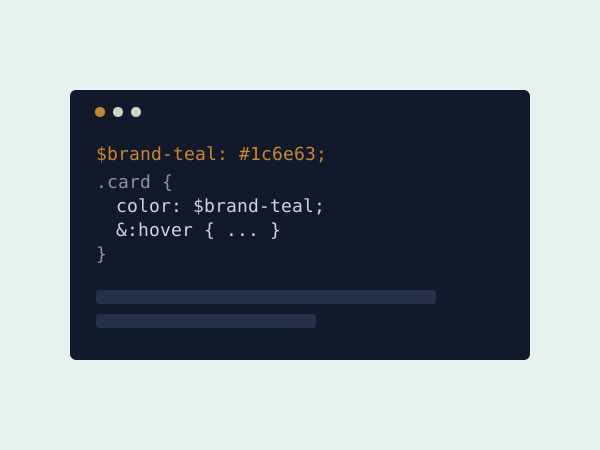
$brand: #1c6e63;
.btn { color: $brand; }

// LESS
@brand: #1c6e63;
.btn { color: @brand; }
Where they actually diverge
Sass ships with a richer set of built-in functions and control directives (@each, @if), and its ecosystem - Compass, and now the growing library of Sass-based frameworks - is larger. LESS compiles in the browser via JavaScript as well as at build time, which appealed to some early adopters but matters less now that build tooling is standard on most teams.
Our default has settled on Sass, mostly for the ecosystem rather than any deep technical advantage - and consistency across projects matters more than either tool's individual merits.
The features overlap more than the marketing suggests
Both support nesting, variables, mixins, and math operations - for a huge share of everyday styling work, the two preprocessors are functionally interchangeable, and picking between them by feature checklist alone rarely settles anything.
// Sass
@mixin center { display: flex; justify-content: center; align-items: center; }
// LESS
.center() { display: flex; justify-content: center; align-items: center; }
Where Sass actually pulled ahead
Sass's more capable control directives (@each, @if/@else with genuine logic), its larger ecosystem of tooling and community mixins, and its adoption inside major frameworks like Bootstrap and Bulma are the practical reasons it became the default choice for new projects, rather than any single dramatic feature LESS lacked entirely. For a team choosing today with no existing investment in either, that ecosystem weight is the deciding factor more often than any syntax difference.