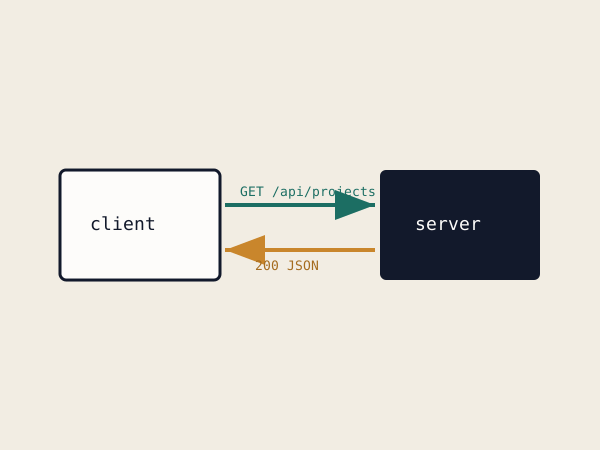
A REST endpoint returns a fixed shape - every consumer gets every field, whether they need it or not, and a screen needing data from three resources makes three separate requests. GraphQL flips that: the client sends a query describing exactly the fields it wants, from however many underlying resources, and gets back exactly that shape.
query {
  project(id: "42") {
    title
    client { name }
  }
}
One endpoint, not many
A GraphQL API is typically a single /graphql endpoint; the query itself, not the URL, determines what comes back. That's a real shift from REST's resource-per-URL convention, and it takes a project or two to stop reaching for REST habits out of muscle memory.
Where we're using it
So far, dashboards pulling data from several internal services at once are the clearest win - one request instead of four, with no unused fields dragged along for the ride.
Over-fetching and under-fetching, solved by the same mechanism
A REST endpoint returns a fixed shape - too much data for a mobile list view, too little for a detail page, requiring a second request to fill the gap. GraphQL lets the client specify exactly the fields it needs in a single request, for exactly the views it's rendering:
query {
  user(id: "42") {
    name
    posts(limit: 5) { title }
  }
}
The tradeoff nobody mentions in the pitch
That flexibility moves real complexity from the client to the server - caching, which was nearly free with REST and HTTP caching semantics, now needs a purpose-built solution like normalized client-side caching (Apollo, urql). Query complexity also needs active guarding, since a naive nested query can accidentally request an exponentially large amount of data. GraphQL is a genuine improvement for the right kind of API, not a context-free upgrade over REST.